Cultural Heritage & Civil Rights Law
Greg Werkheiser’s mission is to connect the lessons of our past with the leadership of our future. Only by leveraging wisdom gleaned from history and diverse cultures can we solve modern challenges and build a better society.
The first step is to protect cultural heritage. Historical buildings, artworks, artifacts, landscapes, and traditional practices and knowledge systems face various threats. Dangers include wars and conflicts, natural disasters, poorly planned and managed infrastructure development and urbanization, looting and illicit trade, neglect, unsustainable tourism practices, racism, and cultural dominance. These threats evidence the need for robust and proactive cultural heritage management, including the use of legal measures, education, and technological innovations to ensure the preservation and continuity of cultural heritage for future generations.
Greg has helped to establish cultural heritage law as a distinct field of practice. In 2010, he cofounded Cultural Heritage Partners, the world’s first and now preeminent law firm to dedicate itself wholly to matters involving cultural heritage preservation in all its forms. The firm operates on the principle that access to cultural heritage is a human right. CHP’s attorneys, archaeologists, and Tribal specialists serve clients globally from offices in Washington, DC and Richmond, VA.
CHP's Social Channels
Representative Cases
Saving Black Creek, home to 500 generations of Native Americans
Removing America’s most infamous Confederate “Lost Cause” monuments
Balancing preservation and offshore wind development
Saving Rassawek, the Monacan Indian Nation’s historic capital and sacred site
Restoring recognition to Tribes in New Jersey
Reclaiming the stolen Wounded Indian sculpture
Building a national coalition of preservation groups for Preservation50
Securing parity for descendants of the enslaved at
President Madison's Montpelier
For generations, Montpelier served as the home of President James Madison, the primary architect of the Constitution, and his family. The historic Virginia plantation was also “home” to at least 300 enslaved persons, most of whom were buried in unmarked graves on site. Descendants of those enslaved formed the Montpelier Descendants Committee (MDC) and, working with historians, developed a framework for sites of conscience called “structural parity.” The term is defined as the sharing of site governance with descendants. The MDC’s aim was to ensure accurate and full history that honors their ancestors’ lives and contributions to Madison’s public service, informs analysis of the Constitution, and guides contemporary social decisions.
In June 2021, the Montpelier Foundation Board voted to give the MDC at least half of future board seats, but one year later rescinded its promise to share power with Black descendants. The MDC hired CHP, with Greg leading efforts to hold the Board accountable, sparking an internationally watched struggle that drew support from major cultural institutions and tens of thousands of citizens nationwide. When Montpelier’s own staff stood up to their President and Board, they were fired in retaliation. But sustained pressure ultimately succeeded: the former President and Board Chair departed, a new Board led by a descendant-chosen majority was installed with the former MDC leader as Chair, fired staff were rehired, and record financial support poured in, including a ~$6M grant from the Mellon Foundation.
Montpelier became the first cultural site in the United States to achieve structural parity, establishing a global model for sites committed to accurate, inclusive commemoration and proving that sustained advocacy can force institutions to honor their commitments to justice. Learn more.
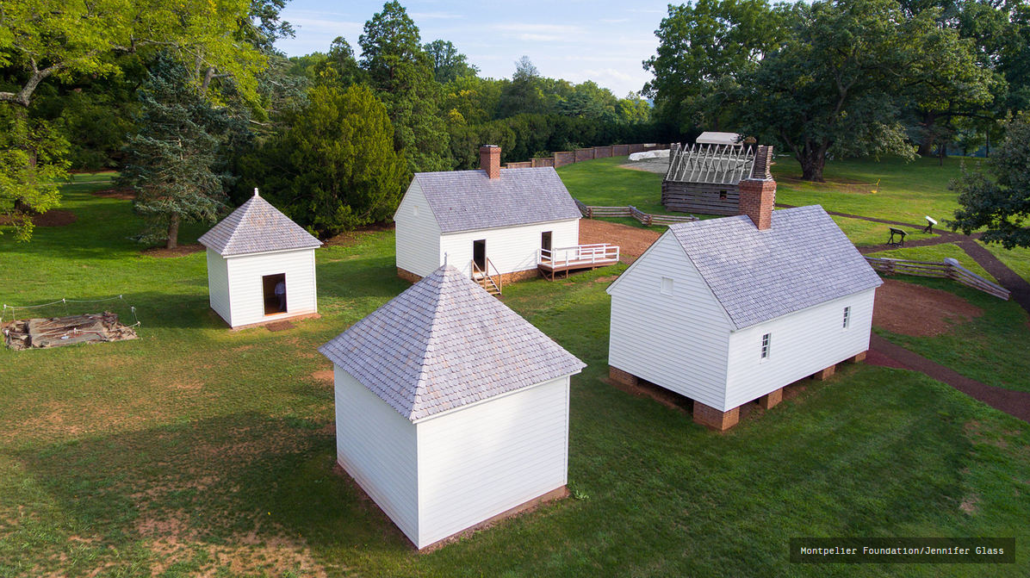
Reconstructed slave quarters at James Madison's Montpelier. Photo credit: Montpelier Foundation / Jennifer Glass
- Associated Press, "Madison estate rehires staff let go during recent turmoil," (June 5, 2022)
- The New York Times, "At Montpelier, Slaves’ Descendants Will Share Power With White Board Members," by Alyssa Lukpat (May 16, 2022)
- NPR, "Montpelier says it’s open to parity with slave descendants. Descendants cry foul," by Alana Wise (April 20, 2022)
- Richmond Times-Dispatch, "At James Madison's Montpelier, 'parity' for the descendants of the enslaved as stalled," by Michael Paul Williams (April 6, 2022)
- The Washington Post, "James Madison’s Montpelier strips power from enslaved descendants group," by Gregory S. Schneider (March 25, 2022)
Removing America’s most infamous Confederate
“Lost Cause” monuments
Greg’s legal career is focused on preserving cultural heritage. However, while art can be used to reveal truth or tell lies, it can also be used as racist propaganda, which should not be glorified on public property. That’s why Greg and his team helped to remove from public places of honor Confederate “Lost Cause” monuments that were erected decades after the Civil War to perpetuate white supremacy ideology.
In the aftermath of the murder of George Floyd, residents of Richmond, Virginia, the former capital of the Confederacy, demanded the removal of the famous Confederate monuments lining the city’s Monument Avenue. Greg and colleagues developed a legal strategy to support Mayor Levar Stoney’s urgent effort to remove the monuments. Citing the deadly precedent of the Unite the Right rally in Charlottesville, the Mayor evoked his public emergency powers to remove the monuments as public nuisances before protestors clashing with white supremacists resulted in injury or worse. The surprise first removal of the towering statue of Stonewall Jackson during a lightning storm dominated headlines around the world. Over time, all 13 city-owned monuments were successfully and safely removed, despite death threats and litigation challenging Greg’s firm’s advice.
Only the prominent statue of General Robert E. Lee remained as it stood on state, not city, property. Sixty residents living within sight of the monument supported its removal and engaged CHP to represent them before the Virginia Supreme Court. On their behalf, CHP filed an amicus brief arguing that U.S. historic preservation policy allows for the removal of this particular monument. In September 2021, the Court issued two unanimous rulings affirming Governor Northam’s authority to remove the state-owned monument. The Lee Monument was disassembled and relocated in December 2021.
Thereafter, CHP secured the transfer of ownership of all of the removed monuments to the Black History Museum and Cultural Center of Virginia, which worked with the community to determine the fate of the monuments. Opportunities to help other communities across the nation deal with their own Confederate monuments have followed. These removals are an important, if symbolic, testament to America’s willingness to continue its long struggle for racial justice. Learn more.
Sample News Coverage
- The Washington Post, "Robert E. Lee monument, other Confederate statues could go to Richmond's Black History Museum under deal," by Gregory S. Schneider (December 30, 2021)
- BBC, "Virginia Confederate monuments likely headed to the black history museum," (December 30, 2021)
- NBC 12 News, "Monument Avenue residents join fight to remove Robert E. Lee statue," by Henry Graff (October 30, 2020)
- Politico, "The Black, Millennial Mayor Who Torn Down His City’s White Monuments," by Andrew Lawler (August 9, 2020)
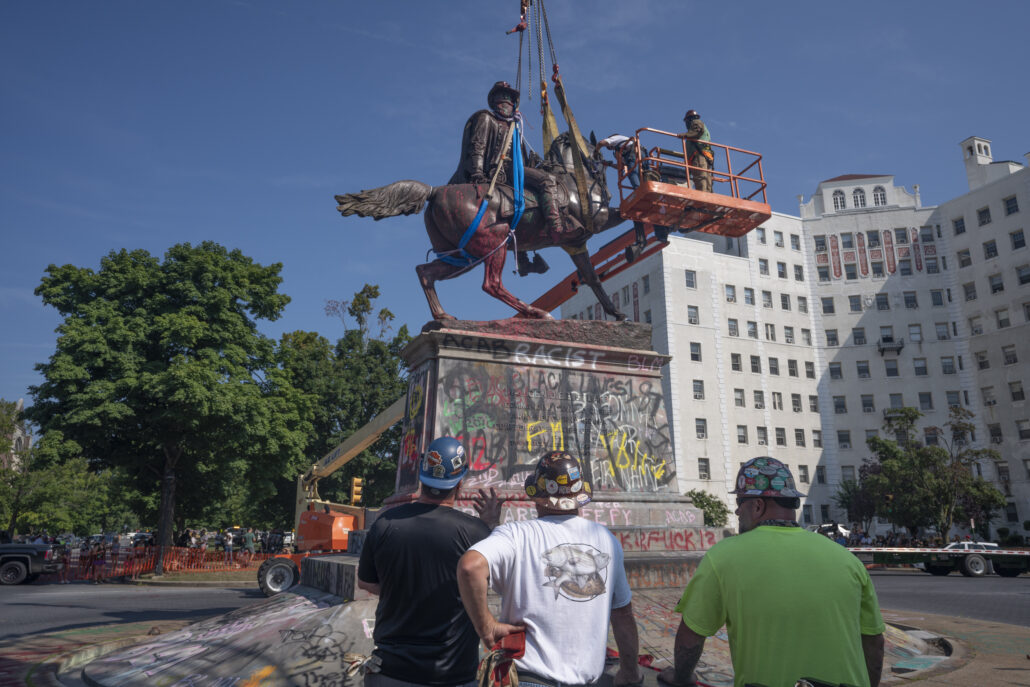
Removal of the J.E.B. Stuart Monument from Monument Avenue by Team Henry Enterprises. Photo credit: Team Henry Enterprises
Saving Rassawek, the Monacan Indian Nation’s historic capital and sacred site
Native American cultural sites are frequently destroyed by development because there are so many threats, the resources of Tribes are limited, and American society has placed too little value on the stories of those who lived here for 13,000 years before and through the 250 years of American history. Greg and his team have taken on cases where victory means not only saving one site, but creating models and precedents that help lessen threats to many other sites. In 2022, CHP helped the Monacan Indian Nation win a four-year battle to protect the Tribe’s historic capital at Rassawek. The site was long known. John Smith identified Rassawek on his 1612 Map of Virginia as the “chiefest” town in the Monacan territory, which covered half of what is today Virginia. Monacans occupied Rassawek through 200 generations, beginning 4,730 years ago. In the 1880s, the Smithsonian documented the site’s important archaeological resources and extensive human burials. Yet, in 2014, the James River Water Authority (JRWA), a body representing two county governments, initiated plans to build a water pump station and pipeline through the heart of Rassawek, destroying it. In 2020, the National Trust for Historic Preservation named Rassawek to its list of America’s 11 Most Endangered Historic Places. CHP secured support from 12,000 organizations and individuals in a contentious legal and public battle to save Rassawek. Finally, the local governments relocated their project, marking the first major effort to preserve a Native site in Virginia since seven Tribal Nations received federal recognition. The legal, political, and media strategies that save Rassawek are proving to be a model for other fights to preserve ancestral Native lands nationally. Learn more.
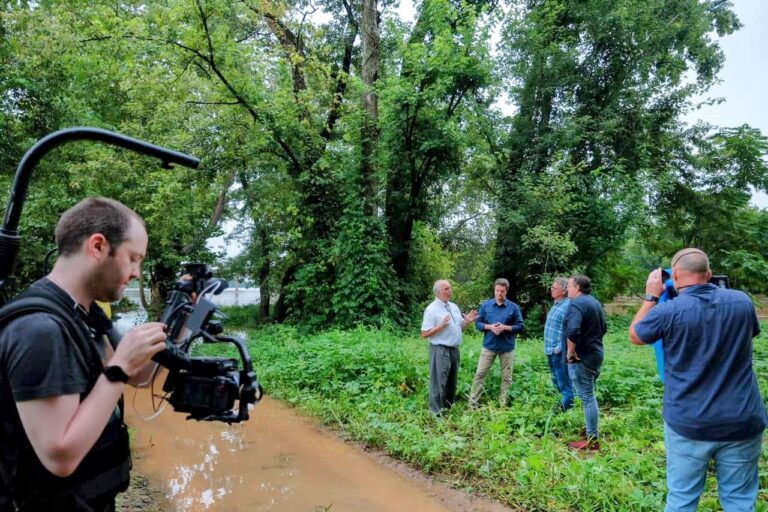
Chief Kenneth Branham of the Monacan Indian Nation and Greg Werkheiser were interview for the Emmy award-nominated show The Good Road. Photo credit: The Good Road
- The Washington Post, "Battle over Native American burial site in Virginia ends in tribal victory," by Gillian Brockell (March 16, 2022)
- CBS 19 News, "Monacan Indian Nation’s burial site saved from water project’s development," by Anne-Parker Coleman (March 18, 2022)
- Virginia Mercury, "Water authority abandons plans to site pump station at Rassawek," by Sarah Vogelsong (March 16, 2022)
- National Geographic, "Native American Capital Among 11 Most Endangered Historic Sites," by Andrew Lawler (September 24, 2020)
Reclaiming the stolen 'Wounded Indian' sculpture
CHP represented the Massachusetts Charitable Mechanic Association (MCMA) in their efforts to reclaim the Wounded Indian sculpture, improperly acquired by the Chrysler Museum in Norfolk, Virginia after its theft from MCMA’s Boston premises. Created by American sculptor Peter Stephenson, the Wounded Indian was prominently displayed in the MCMA’s Mechanics Hall for 65 years before it disappeared during a move in 1958. Soon thereafter a New York collector of questionable ethics acquired the statue from unknown sources and later gave it to the Chrysler Museum, which failed to verify the legal ownership of the statue. Since their discovery of the statue in the Chrysler’s possession, MCMA endeavored to reclaim their statue to put it back on display in Boston in fulfillment of their promises to the donor, but the Chrysler initially resisted. This case drew national attention because it so clearly advanced the principles that documentation of ownership of art is important to preventing theft, looting, and fraud, and that museums owe duties of transparency to the public. CHP secured a settlement with the Chrysler wherein they agreed that MCMA owns the Wounded Indian and that they will return it permanently, with MCMA ensuring its public display in the Boston area. Learn more.
- The Boston Globe, “Contested ‘Wounded Indian’ sculpture heading back to Boston after a quarter-century in Norfolk’s Chrysler Museum,” by Malcolm Gay (August 9, 2023)
- The Washington Post, “Norfolk museum agrees to return ‘Wounded Indian’ statue to Boston,” by Greg Schneider (August 9, 2023)
- The Art Newspaper, "Bitter Row Rages Over Ownership of Marble Sculpture of Indigenous Man Held at US Museum," by David D’Arcy (July 7, 2023)
- WINA Newsradio, "Chrysler Museum Historic Sculpture Controversy," by Courteney Stuart (June 5, 2023)
- The Washington Post, "Mystery of ‘The Wounded Indian’: Who owns a statue once thought destroyed?" by Greg Schneider (May 21, 2023) (also in print on A-1, May 24, 2023) (PDF version)
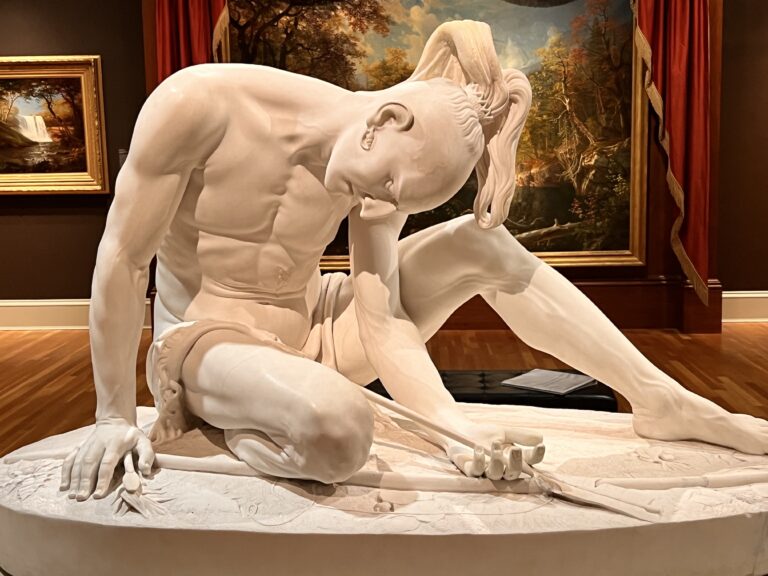
The 'Wounded Indian' on display at The Chrysler Museum in Norfolk, VA. Photo credit: Stewart Gamage
Restoring recognition to Tribes in New Jersey
Greg successfully represented the Nanticoke Lenni-Lenape Indian Tribe in state and federal civil rights lawsuits against a series of Attorneys General in New Jersey. After New Jersey acknowledged over many decades the presence of three Tribes, Governor Chris Christie’s administration suddenly and without justification took the position that no tribes were present in the state. This denial greatly harmed the Tribes’ rights to sell arts, address health issues in their community, operate their businesses, and more. The suit alleges that New Jersey’s attempt to nullify long-standing state recognition of Native American tribes without due process violated the US and New Jersey constitutions. The state’s motivation for its action was a racist assumption that the Tribes would see to conduct casino gaming (even though each of the Tribes has long been opposed to gambling), which motivation violated their constitutional rights to equal protection of the laws. After years of litigation, the state fully reversed its position, reaffirmed prior recognition of New Jersey’s three tribes, and paid them a multi-million-dollar settlement to compensate for damages. The case created strong precedent for states to treat state-recognized Tribes fairly.
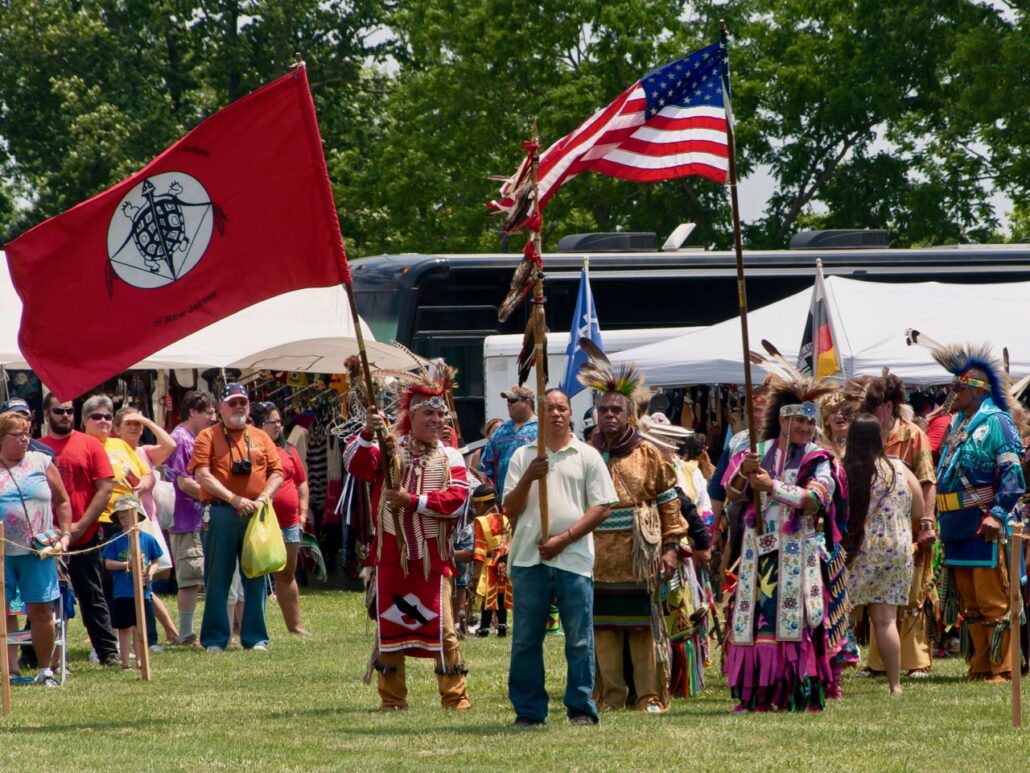
Photo credit: Nanticoke Lenni-Lenape Tribal Nation
- Law360, “NJ Agrees to Recognize Tribe, Pay $2.4M To End Court Battle,” by Bill Wichert (November 15, 2018)
- Cultural Heritage Partners, PLLC, "Justice Prevails: CHP Secures Tribal Civil Rights in Landmark Settlement with New Jersey," (November 15, 2018)
- PR Newswire, “Two More NJ Tribes have Recognition Reaffirmed,” by Powhatan Renape Nation (March 18, 2019)
- Native Sun News Today, "Tribe wins six-year battle to restore state recognition," (November 21, 2018)
- NBC 4 News, “In Historic Move, New Jersey Acknowledges Native American Tribe, Will Pay $2.4 Million,” (November 16, 2018)
Saving Black Creek, home to 500 generations Native Americans
On behalf of a Native American tribe, Greg successfully sued to prevent a New Jersey municipality from destroying the Black Creek Site to create soccer fields. Located in Vernon Township, the 40-acre landscape includes many thousands of artifacts documenting more than 10,000 years of Native American occupation through approximately 500 generations. Working closely with local residents, archaeologists, Tribes, and supporters nationwide, and through 25 legal and legislative hearings, the site was saved. The Black Creek Site preservation team won the Governor’s Award for preservation from the State of New Jersey, and today the site anchors a state park. The case was the first instance in which a municipality attempted to nullify a site’s status as eligible for listing on the state and national register of historic places. Black Creek remains one of only three Native American sites out of the more than 1,700 places listed in the New Jersey Register of Historic Places.
- The Record, "Black Creek Site's Historic Status Affirmed," by Paul H. Johnson (April 17, 2004)
- Business Wire, "Landmark Court Ruling Favors Lenape Indians," (April 16, 2004)
- State of New Jersey Department of Environmental Protection, “DEP Wins Victory for Historic Preservation: Remaining Portion of Black Creek Site Listed to New Jersey Register of Historic Places,” by Elaine Makatura (April 14, 2004)
- The Record, “Native American site in Vernon wins U.S. protection,” by Richard Cowen (December 14, 2002)
- The New York Times, "Burial Ground or Ball Field? Past May Clash With Future," by Robert Hanley (July 7, 2001)
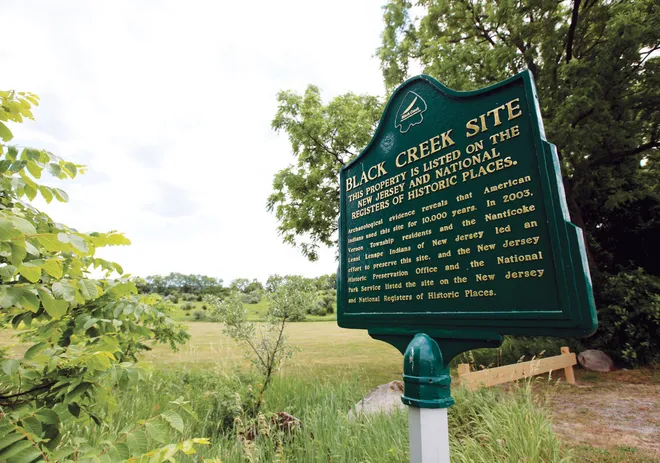
Photo credit: Vernon Historical Society, Jessica Paladini
Balance preservation and offshore wind development
Renewable energy is an important part of our response to climate change and should be developed in ways that respect cultural heritage. We help local and tribal governments, neighborhood associations, and communities advocate for historic properties and heritage tourism economies that will be negatively impacted by offshore wind development. We help consulting parties protect their legal rights under the National Environmental Policy Act and National Historic Preservation Act and negotiate agreements with developers to minimize negative impacts and share the benefits of these developments.
Historic preservation and clean energy goals are not mutually exclusive. Indeed, the historic preservation movement is a leader in finding creative ways to address climate change and sea level rise. However, communities with significant inventories of historic properties connected to historic ocean viewsheds have legal rights under the National Environmental Policy Act and National Historic Preservation Act that too often get overlooked. Under these federal statutes and related state laws, federal agencies have a duty to assess adverse effects on historic and cultural resources and find ways through consultation to avoid, minimize, or mitigate harm.
Our work on behalf of clients is driven by our belief that communities and offshore wind developers can and should forge long-term partnerships. Establishing trust, engaging in consultation, and developing creative solutions make it possible to achieve clean energy goals while ensuring that communities have ways to offset the development’s harms to heritage tourism, property values, and historic context.

Photo credit: Alamy
- The Inquirer and Mirror, "Firt Vineyard Wind turbines barged to offshore installation site," by Dean Geddes (Septmeber 13, 2023)
- The Inquirer and Mirror, "Offshore wind could cost town $815 million in tourism," by Dean Geddes (February 16, 2023)
- Nantucket Current, "Town To Receive $16 Million For Potential Impacts of Vineyard Wine Project," by JohnCarl McGrady (August 3, 2022)
- Newport This Week, "Proposal for 200 Wind Turbines to Impact City," by Philip Cozzolino (February 3, 2022)
- "Vineyard Wind and Nantucket Announce Community Partnership," by Vineyard Wind (September 9, 2020)
Building the largest ever coalition of preservation groups for Preservation50
In 2016, national organizations, federal and state agencies, Tribal governments, and community groups around the country celebrated the 50th anniversary of the National Historic Preservation Act (NHPA). Signed into law on October 15, 1966, the NHPA created a system of legal classifications as well as grants, loans, and tax incentives, with the goal of protecting the heritage of the built environment. Half a century later, the NHPA continues to provide a framework for community rehabilitation and a catalyst for tourism. To celebrate this milestone, Greg’s team at CHP helped an unprecedented coalition of groups run a multiyear program called Preservation50, the mission of which was “to celebrate, learn from, and leverage the National Historic Preservation Act’s first five decades to assure historic preservation’s vibrant future in America.”
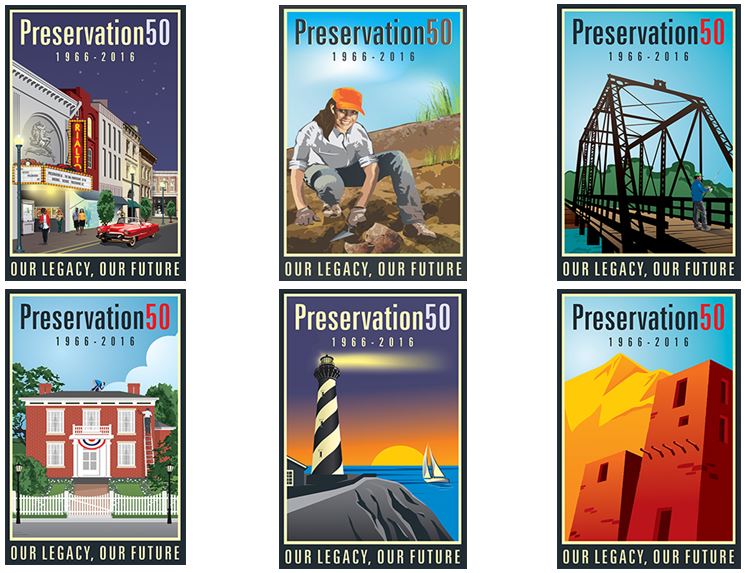
Preservation50 Logos. Photo credit: Cultural Heritage Partners, PLLC
- Richmond Times-Dispatch, "Historic preservation still unites us," by Dorothy McAuliffe (February 21, 2017)
- The Guardian, "Let's celebrate US archaeology's best kept secret," by Holly Norton (December 12, 2016)
- Historic Hawaii Foundation, "Celebrating 50 Years of the National Historic Preservation Act," by Greg Werkheiser (April 22, 2016)
- HuffPost, "In a Historic Election, Where Do the Candidates Stand on Protecting America's Heritage?" by Greg Werkheiser (March 29, 2016)
- Perspectives on History, "Building Blocs: Celebrating 50 Years of Historic Preservation," by Jane Green (November 1, 2015)